
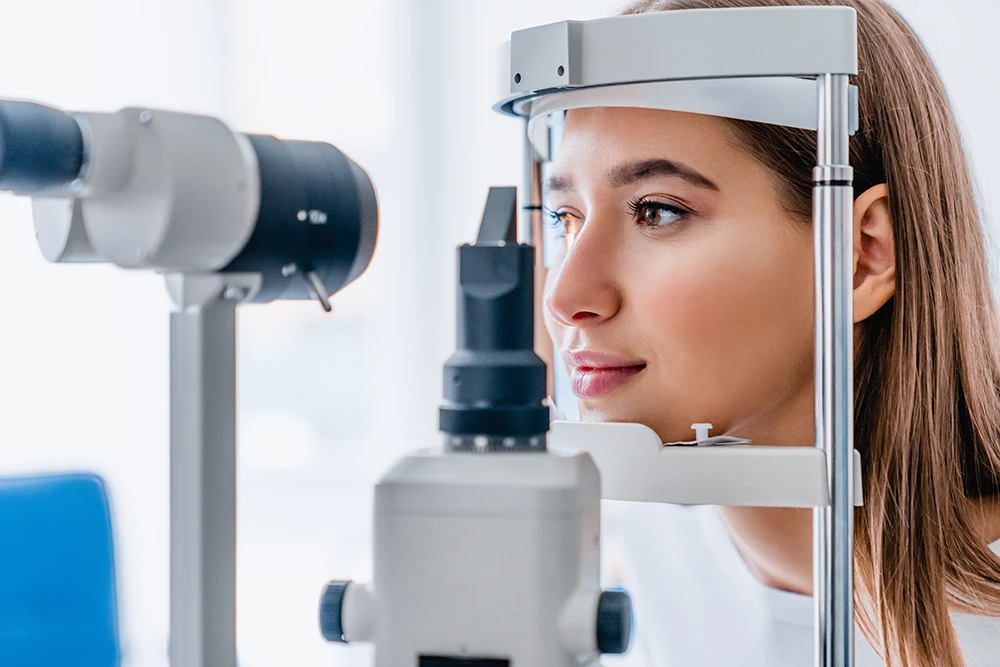
When was the last time you saw an eye doctor? Most people think of an eye exam as a quick vision check to see if they need new glasses or an updated prescription, but a comprehensive eye exam goes much deeper than that. It can reveal early changes in eye health long before vision feels noticeably different.
This blog explains what happens during a comprehensive eye exam, what your eye doctor looks for, and how it can help detect serious conditions before they affect your daily life.
Why you shouldn’t skip your annual eye exam
If your vision seems fine, you may assume your eyes are healthy, and nothing has changed. But many eye conditions develop slowly and quietly.
Eye doctors can detect:
- Subtle prescription changes for glasses or contact lenses
- Early signs of glaucoma that may not affect vision yet
- Changes in the retina linked to macular degeneration
- Clouding of the lens associated with cataracts
- Symptoms of dry eye that can impact comfort and clarity
These findings can help you get the care you need before symptoms start to affect your daily routine.
Checking your vision and prescription
One of the most familiar parts of the visit involves testing how clearly you see at different distances. This helps determine whether your current prescription is still the right fit.
During this portion, your eye doctor may:
- Evaluate distance and near vision
- Refine prescriptions for glasses
- Assess fit and vision quality if you wear contact lenses
- Compare changes since your last exam
Even small adjustments can make reading, driving, and screen time feel more comfortable.
Assessing eye health
Beyond vision testing, a comprehensive eye exam focuses heavily on the health of the eye itself. This is where early signs of disease can often be detected, sometimes before you notice any vision changes.
To get a detailed look at what’s happening inside your eyes, our eye doctors may use advanced technology such as optical coherence tomography (OCT) and Optomap digital retinal imaging. These tools help capture highly detailed images of the retina and optic nerve, allowing for earlier detection and better monitoring of eye health over time.
Your optometrist will check for:
Early signs of glaucoma
Pressure testing and optic nerve evaluation help detect early signs of glaucoma, which can develop without obvious symptoms.
Retinal issues
Imaging and evaluation help identify early changes linked to macular degeneration, especially in central vision.
Cataracts
We check the lenses of your eyes for early clouding that may indicate cataracts.
Signs of dry eye
We evaluate signs of dry eye, including tear quality and surface irritation.
Personalized treatment recommendations and care
Once the exam is complete, your results help shape a plan that supports both vision and eye health.
This may include:
- Updated prescriptions for glasses
- New or adjusted contact lenses, including specialty options for astigmatism, keratoconus, and other eye conditions
- Dry eye treatment recommendations for dry eye symptoms
- Monitoring plans for early glaucoma or macular degeneration
- Long-term tracking of cataracts until surgery is needed
Clearer vision and early answers for peace of mind
Seeing an eye doctor regularly is the best way to help ensure your eyes stay healthy. It also helps make sure your vision needs are properly supported, including whether your glasses or contact lenses are still working well for your daily life.
Schedule a visit at Kristin L. Campbell, OD, today to stay ahead of vision changes.